

Preparing for Safe and Effective Operation
As the seasons turn across Northern Ireland, managing garden debris becomes a constant task. Since their invention, leaf blowers have transformed this chore from hours of raking into minutes of efficient clearing. But before you even think about pulling the starter cord, a few moments of preparation are essential for both safety and performance. This isn't just about ticking boxes; it's the foundation of professional garden work.
A comprehensive leaf blower safety guide always begins with personal protective equipment (PPE). Think of it as your uniform for the job. Each piece serves a critical purpose:
- Sturdy Boots: Essential for maintaining a firm grip on the damp, often slippery ground common in our local gardens.
- Gloves: These do more than protect from blisters. They significantly reduce the vibration transferred from the machine to your hands, preventing fatigue.
- Eye and Hearing Protection: This is non-negotiable. A leaf blower can propel small stones or twigs at high speed, and the noise from a petrol engine can cause long-term hearing damage.
With your PPE sorted, give the machine a quick inspection. Ensure the fuel cap is secure and that the air intakes are free from old leaves or dirt. Finally, choose a safe starting area. Find a clear, flat spot away from loose gravel or debris that the blower could suck in and project dangerously upon start-up.
Mastering the Correct Starting Procedure
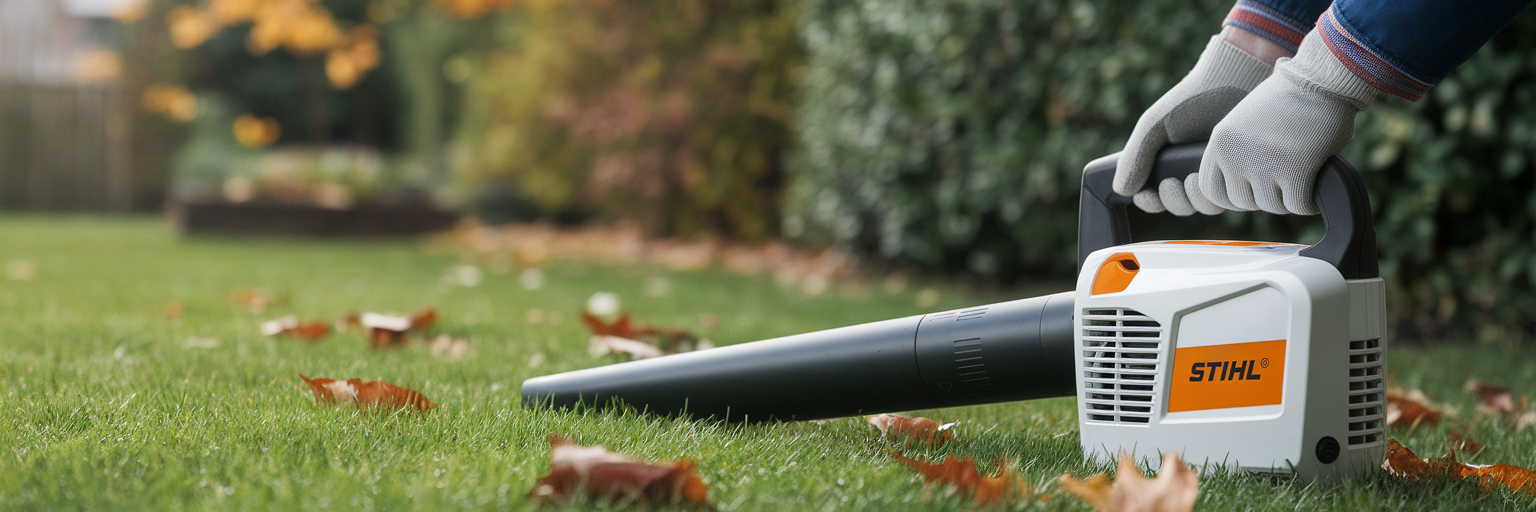
Starting a petrol-powered STIHL blower for the first time can feel intimidating, but it follows a simple, logical sequence. Following these steps ensures a reliable start, even on a cold Northern Irish morning, and prevents common issues like engine flooding. These steps are based on standard procedure, and as STIHL USA notes in its official guide, familiarising yourself with your specific model is always recommended.
- Set the Choke: Move the choke lever to the closed or 'cold start' position. This enriches the fuel mixture for ignition.
- Prime the Engine: Press the small, transparent primer bulb (the manual fuel pump) several times until you see fuel inside it. This draws petrol into the carburettor.
- Set the Throttle: Position the throttle trigger to its starting position, as indicated in your user manual.
- Pull the Starter Cord: Place the blower on firm ground. Pull the cord slowly until you feel it engage, then give it a short, brisk pull. Don't yank it to the end of its length.
- Warm Up: Once the engine fires, immediately blip the throttle. This action automatically disengages the choke. Let the machine idle for 30 to 60 seconds to warm up properly before you begin working.
Of course, battery-powered models offer a much simpler experience, often just requiring the press of a button. Whether you prefer the power of petrol or the convenience of battery, the full collection of our power and garden equipment offers solutions for every need.
Techniques for Efficient Debris Clearing
Now that your blower is running, the real work begins. Knowing how to use a leaf blower effectively is less about raw power and more about smart technique. The first rule is simple yet crucial: always work with the wind, not against it. Let nature do some of the work for you. For large areas like lawns, use a 'herding' method. Start from the outer edges and walk in a spiral or back-and-forth pattern, guiding all the debris towards a central point. This creates one large, manageable pile instead of many small ones scattered around.
A common challenge here is clearing wet leaves with blower, a frequent task given our climate. Pushing them from above is often ineffective. The key is to use a higher throttle setting and get the nozzle of the blower underneath the edge of the leaf mat. This allows the powerful jet of air to lift and peel the stuck-down layers away from the grass or pavement. It’s a subtle shift in approach that makes a huge difference.
Your choice of nozzle also plays a strategic role. A standard round nozzle is great for moving large volumes of light, dry debris. For stubborn, wet leaves or scraping debris from the edges of patios, switch to a flat nozzle. It concentrates the airflow into a powerful, blade-like jet, giving you the precision needed for tougher jobs. A leaf blower is an indispensable tool for effective garden maintenance in Northern Ireland, and mastering these techniques ensures you get the most from it. For a complete toolkit to manage your outdoor space, explore the solutions available in our comprehensive collections.
Year-Round Uses Beyond Autumn Leaves

Many people put their leaf blower away once the last autumn leaf is cleared, but that means missing out on its year-round versatility. This single tool can handle a surprising number of tasks across all seasons, making it one of the most useful pieces of equipment in your shed.
In spring and summer, it becomes the perfect clean-up companion. After mowing the lawn or trimming hedges, a quick blast clears grass clippings from paths and tidies up stray cuttings from flowerbeds in seconds. It’s also brilliant for clearing dust, cobwebs, and dry debris from patios, driveways, and decking before guests arrive. A less common but practical tip is to use it to quickly dry damp garden furniture after a rain shower or to blow water off your lawnmower deck to help prevent rust. Some models even have gutter cleaning attachments, allowing you to safely clear blockages from the ground.
Even in winter, it has its uses. For the light, powdery snow we often get, a leaf blower is far quicker than a shovel for clearing paths, steps, and cars. It is important to note it is not effective for wet, heavy slush. While a blower excels at loose debris, for ingrained dirt on patios, a dedicated machine from our floor cleaners range will complete the job perfectly.
| Season | Primary Task | Benefit |
|---|---|---|
| Spring | Clearing debris from pruning and hedge trimming | Quickly tidies up garden beds and lawns |
| Summer | Blowing grass clippings off paths and patios | Maintains a neat finish after mowing |
| Autumn | Herding and piling wet and dry leaves | Efficiently manages seasonal leaf fall |
| Winter | Clearing light, powdery snow from walkways | Faster and less strenuous than shovelling |
Note: The effectiveness of a leaf blower can vary based on the model's power and the specific conditions, such as the moisture content of debris or snow.
Essential Maintenance and Proper Storage
A well-maintained tool is a reliable tool. Spending just a few minutes on care after each use will ensure your STIHL leaf blower starts every time and performs at its best for years to come, saving you from the frustration of a non-starter. The routine is straightforward. After the engine has cooled, wipe down the casing to remove dirt and resin. Pay close attention to the air intake vents, ensuring they are clear of debris to allow for proper engine cooling. A clogged air filter is a common cause of poor performance, so check it regularly and clean or replace it as needed.
For those with petrol models, proper petrol leaf blower maintenance is vital. Modern fuel can degrade quickly, causing carburettor problems. If you plan to store the blower for more than a month, it is best to either drain the fuel tank completely or add a fuel stabiliser to a full tank. For cordless models, battery care is just as important. Avoid storing the battery in a cold, damp shed. Keep it indoors in a dry place, ideally with a partial charge rather than fully charged or completely empty.
Finally, store the machine securely in a dry garage or shed. A wall-mounted bracket is an excellent way to keep it safe and out of the way. Proper maintenance ensures your equipment is always ready for the job. At Gerni NI, we provide the support and official parts to keep your tools in top condition.
Being a Considerate Operator in Your Neighbourhood
Using powerful garden machinery comes with a responsibility to your neighbours. While a leaf blower is incredibly efficient, its noise can be disruptive if used thoughtlessly. Being considerate is one of the most valuable STIHL leaf blower tips UK residents can follow to maintain good community relations. The first step is timing. Avoid operating your blower early in the morning, late in the evening, or on a quiet Sunday. Stick to sociable hours when household noise is generally more expected.
Pay close attention to where you are directing the dust and debris. It is easy to get focused on the task and accidentally blast your neighbour’s clean car, windows, or freshly washed laundry. Always be aware of your surroundings and aim the airflow away from their property. You might also find you don’t always need full power. Using the lowest effective throttle setting for the job is not only quieter and more fuel-efficient, but it also gives you better control over the debris.
For bigger jobs that might take a while, a quick, friendly word with your immediate neighbours beforehand can go a long way in preventing complaints. A little courtesy makes all the difference. For those seeking the quietest solutions for daily lawn upkeep, exploring automated options like our robotic mowers can create a perfectly peaceful garden environment.